Montag, 31. März 2014

The Polish Orthodox Church Will Return to the Old Calendar in June


The Polish Orthodox Church will return to the Julian calendar. This decision was taken during the spring session of the Council of Bishops, which took place on March 18 at the residence of Metropolitan Sawa of Warsaw and All Poland.
The decision was taken due to the fact that most of parishes of the Polish Orthodox Church (96%) celebrate church holidays on the Old Calendar. Thus, the Council canceled the decree of April 12, 1924, that introduced the New Calendar into the Polish Church, writes the Orthodox website Sedmitza.

According to the decree, the Church will return to the Old Calendar on June 15, 2014. The Council stated that parishes wishing to conduct services on the New Calendar may still do so.

The Council also reviewed the matter of bringing to the country the relics of St. Mary Magdalene, who is considered the patron saint of the Polish Church. The Metropolitan Cathedral in Warsaw is named in her honor, as is the main church ceremonial order. Her holy relics will be in Warsaw from August 16-23, 2014.

It was also decided to continue the work of translating the Book of Needs into Polish.

The Council also reviewed awards for clergy and laity of the Polish Orthodox Church on the occasion of the upcoming feast of Pascha.


Sonntag, 30. März 2014

The Inward Mission of Our Church

Bringing About Orthodoxy


by Blessed Father Justin Popovich

It is very, very difficult indeed for infinite and eternal life to make its way into the human soul—so narrow—and even into the narrower human body. Held behind bars, the inhabitants of this earth suspiciously stand their ground against anything coming from without. Cast into this prison of time and space they are unable—from atavism or perhaps from inertia—to bear being penetrated by something outlasting time, outlying space, something which surpasses these, and is eternal. Such an invasion is considered to be aggression towards them and they respond with war. A man, given the fact that he is being corrupted by the "moth" of time, does not like the intrusion of eternity into his life and is not easily able to adapt himself to it. He often considers this intrusion to be sheer unforgivable insolence. At certain times he might become a hardened rebel against eternity because in the face of it he perceives his own minuteness; at others he even experiences fierce hatred towards it because he views it through such a human prism, one that is all too earthbound, all too worldly. Plunged bodily into matter, bound by the force of gravity to time and space, and having his spirit quite divorced from eternity, the worldweary man takes no pleasure in those arduous expeditions towards the eternal, toward what lies beyond. The chasm existing between time and eternity is quite unbridgeable for him because he lacks the strength and ability needed to get across it. Thoroughly besieged by death, he covers with scorn all those who say to him, "Man is immortal; he is eternal." Immortal in just what respect? In his mortal body? In what respect eternal? With respect to his feeble spirit?
In order for a person to be immortal he must, at the very core of his sense of self, feel himself immortal. For him to be eternal, in his center of consciousness of self he must know himself eternal. Without doing this, for him both immortality and eternity alike will be conditions imposed from the outside. And if at one time man did have this sense of immortality and awareness of eternity, he had it so long ago that it has since wasted away under the weight of death. And waste away it really has; we learn this from the whole mysterious makeup of human beings. Our whole problem lies in how we might rekindle that extinguished feeling, how we might revive the wasted-away awareness. Human beings are not in a position to do this; nor, indeed, are the "transcendent gods" of philosophy. It is something to be done by God, who incarnated His immortal Self inside man's sense of himself and incarnated His eternal Self within man's self-awareness. Christ did precisely this when He was made man and became God-human. Only in Christ, in Him alone, did man feel himself immortal and know himself eternal. Christ God-human, in His Person, bridged that chasm between time and eternity and restored relations between them. For this reason only he who is organically made one with Christ God-human, one with His Body, the Church, can be the one to feel himself really immortal and know himself in truth to be eternal. Whereby, for man and humanity, Christ composes the one and only passage and transition from time to eternity. This is why in the Church, the Orthodox Church, Christ became and remained the one and only way and the single guide from the former to the latter, from the sense of one's own mortality to the sense of one's immortality, from self-awareness of what is transient to self-awareness of what is eternal and without dimension.
The ever-living personality of God-human Christ is precisely the Church. The Church is always personality, God-human body and spirit. The definition of the Church, Her life, Her purpose, Her spirit, Her plan, Her ways, all these are given in the wondrous Person of God-human Christ. Hence, the mission of the Church is to make every one of her faithful, organically and in person, one with the Person of Christ; to turn their sense of self into a sense of Christ, and their self-knowledge (self-awareness) into Christ-knowledge (Christ-awareness); for their life to become the life in Christ and for Christ; their personality to become personality in Christ and for Christ; that within them might live not they themselves but Christ in them (Gal. 2:10). The mission of the Church is still to bring about in her members the conviction that the proper state of human personhood is composed of immortality and eternity and not of the realm of time and mortality...and the conviction that man is a wayfarer who is wending his way in the sway of time and mortality towards immortality and all eternity.
The Church is God-human, eternity incarnated within the boundaries of time and space. She is here in this world but she is not of this world (John 18:36). She is in the world in order to raise it on high where she herself has her origin. The Church is ecumenical, catholic, God-human, ageless, and it is therefore a blasphemy—an unpardonable blasphemy against Christ and against the Holy Ghost—to turn the Church into a national institution, to narrow her down to petty, transient, time-bound aspirations and ways of doing things. Her purpose is beyond nationality, œcumenical, all-embracing: to unite all men in Christ, all without exception to nation or race or social strata. "There is neither Greek nor Jew, their is neither slave nor free, there is neither male nor female: for you are all one in Christ Jesus" (Gal. 3:28), because "Christ is all, and in all." The means and methods of this all-human God-human union of all in Christ have been provided by the Church, through the holy sacraments and in her God-human works (ascetic exertions, virtues). And so it is: in the sacrament of the Holy Eucharist the ways of Christ and the means of uniting all people are composed and defined and integrated. Through this mystery, man is made organically one with Christ and with all the virtues: faith, prayer, fasting, love, meekness, through compassion and giving alms, a man consolidates in this union and preserves himself in its sanctity, personally experiencing Christ both as the unity of his personality and as the essence of his union with other members of the body of Christ, the Church.
The Church is the personhood of the God-human Christ, a God-human organism and not a human organization. The Church is indivisible, as is the person of the God-human, as is the body of the God-human. For this reason it is a fundamental error to have the God-human organism of the Church divided into little national organizations. In the course of their procession down through history many local Churches have limited themselves to nationalism, to national methods and aspirations, ours being among them. The Church has adapted herself to the people when it should properly be just the reverse: the people adapting themselves to the Church. This mistake has been made many times by our Church here. But we very well know that these were the "tares" of our Church life, tares which the Lord will not uproot, leaving them rather to grow with the wheat until the time of harvest (Matt. 13, 29-30). We also well know (the Lord so taught us) that these tares have their origin in our primeval enemy and enemy of Christ: the devil (Matt. 13, 25-28). But we wield this knowledge in vain if it is not transformed into prayer, the prayer that in time to come Christ will safeguard us from becoming the sowers and cultivators of such tares ourselves.
It is now high time—the twelfth hour—time for our Church representatives to cease being nothing but the servants of nationalism and for them to become bishops and priests of the One, Holy Catholic, and Apostolic Church. The mission of the Church, given by Christ and put into practice by the Holy Fathers, is this: that in the soul of our people be planted and cultivated a sense and awareness that every member of the Orthodox Church is a Catholic Person, a person who is for ever and ever, and is God-human; that each person is Christ's, and is therefore a brother to every human being, a ministering servant to all men and all created things. This is the Christ-given objective of the Church. Any other is not an objective of Christ but of the Antichrist. For our local Church to be the Church of Christ, the Church Catholic, this objective must be brought about continuously among our people. And yet what are the means of accomplishing this God-human objective? Once again, the means are themselves God-human because a God-human objective can only be brought about exclusively by God-human means, never by human ones or by any others. It is on this point that the Church differs radically from anything which is human or of this earth.
These means are none other than the God-human ascetic exertions and virtues. And these can be successfully practiced only by God-human, Christ-bearing ascetics. God-human virtues exist in an organic kinship. Each has its source in the other and they bring one another to completion.
First among the ascetic virtues is the effort of faith: The souls of our people must pass through, and constantly be passing through, this exertion; meaning that these souls may then be given up to Christ as having no reservations and being without compromises; having extended down to the God-human depths and ascended to the God-human heights. It is essential to create in our people the sense that the faith of Christ is a virtue beyond nationhood, being œcumenical and catholic, trinitarian; and that for someone to believe in Christ entails their waiting on Christ, and only on Christ, with every event of their lives.
The second ascetic virtue is the God-human virtue of prayer and fasting: This being a virtue which must become the way of life of our Orthodox people, becoming the souls of their souls, because prayer and fasting are the all-powerful, Christ-given means of purging not only the human personhood but also society, the people, and the human race at large, of every defilement. It is prayer and fasting which are able to cleanse our people's souls from our defilements and sinning (Mt. 17:19-21; Lk. 9:17-29). The souls of our people must fall in step with the orthodox life of prayer. Prayer and fasting are not to be performed merely for the individual, or for one people, but for everyone and everything ("in all and for all"), for friends and enemies, for those who persecute us and those who put us to death, because that is how Christians are to be distinguished from the Gentiles (Mt. 5: 44-45).
The third God-human virtue is that of love: That love which knows no bounds, which does not question who is worthy and who is not, but loves them all; loving friends and enemies, loving sinners and evildoers, without however loving their sins and their crimes. It blesses the accursed, as the sun does, it shines both on the evil and the good (Matt. 5: 44-46). This God-human love must be cultivated in our people because its catholic character is what sets it apart from other self-proclaimed and relative loves: from that of the pharisaic sort, the humanist, the altruistic, the nationalist, and likewise from animal love. The love of Christ is all-embracing love, always. By prayer it is acquired because it is a gift of Christ. Now the Orthodox heart prays with intensity: Lord of love, this love of Thine for everyone and for all things—give it to me!
The fourth ascetic virtue is the God-human virtue of meekness and humility. Only he who is meek at heart can appease fierce hearts that are in uproar: only he who is lowly in heart can humble proud and haughty souls. To be "showing all meekness unto all men" (Tit. 3:2). But a person becomes truly meek and humble when he turns his heart of hearts into the Lord Jesus, humble and meek, He being the only true "meek and lowly in heart" (Matt. 11:29). The soul of the person must be rendered meek by Christ's meekness. Every person must learn to pray: Meek, gentle Lord, assuage my fierce soul! The Lord humbled himself with the greatest humility—he was incarnate and became a man. Should you be of Christ, then humble yourself as a worm: embed your flesh in the pain of all who are in pain, of everyone sorrowing and in grief; in the trial of everyone who, impassioned, is thus tormented; and in the trauma of every animal and bird. Humble yourself lower than them all: be all things to all men, but be of Christ and according to Christ. When you are by yourself, then pray: O humble Lord, by your humility, humble me!
The fifth ascetic virtue is the God-human virtue of patience and humility: Which is to say, to endure ill-use, not to render evil for evil, to forgive in total compassion all assault, slander and hurt. This is what it is to be of Christ: to feel yourself perpetually crucified to the world, persecuted by it, violated and spat upon. The world will not tolerate Christ-bearing men just as it would not tolerate Christ. Martyrdom is the state in which a Christian brings forth fruit. This must be imparted to our people. For the Orthodox, martyrdom is purification. Being Christian does not simply mean to bear suffering cheerfully, but to pardon in compassion those who cause it, to pray to God for them as did Christ and the archdeacon Stephen. And so, pray: Long-suffering Lord, give me forbearance, make me magnanimous and meek!
Our Church's mission is to infuse these God-human virtues and ascetic exertions into the people's way of living; to have their life and soul knit firm with the Christ-like God-human virtues. For therein lies salvation from the world and from all those soul-destroying, death-dealing, and Godless organizations of the world. In response to the "erudite" atheism and refined cannibalism of contemporary civilization we must give place to those Christ-bearing personalities, who with the meekness of sheep will put down the roused lust of wolves, and with the harmlessness of doves will save the soul of the people from cultural and political putrefaction. We must execute ascetic effort in Christ's name in response to the cultural exercising which is performed in the name of the decayed and disfigured European being, in the name of atheism, civilization, or the Antichrist. Which is why the major task of our Church is the creation of such Christ-bearing ascetics. The watchword which should be heard within our Church today is: Let us return to the Christ-bearing ascetics and to the Holy Fathers! To resume the virtues of Saint Anthony, Saint Athanasios, Saint Basil, and Saint Gregory, of Saints Sergios and Seraphim of the Russians, of Saints Savva, Prochios, and Gabriel of the Serbs, and others like them because it was these God-human virtues which brought about Saint Anthony, Saint Gregory and Saint Savva. And today only Orthodox ascetic efforts and virtues can bring about sanctity in every soul, in the soul of all our people—seeing that the God-human objective of the Church is unalterable and its means are likewise so, since Christ is the same yesterday, today and unto all ages (Heb. 13:8). Herein lies the difference between the world of men and the one in Christ: the human world is transient and time-bound, whilst that of Christ is ever whole, for evermore. Orthodoxy, as the single vessel and guardian of the perfect and radiant Person of God-human Christ, is brought about exclusively by this extension of virtues by grace, through entirely God-human Orthodox means, not through borrowings from Roman Catholicism or Protestantism, because the latter are forms of Christianity after the pattern of the proud European being, and not of the humble God-human being.
This mission of the Church is facilitated by God Himself because among our people there exists an ascetic spirit as created by Orthodoxy through the centuries. The Orthodox soul of our people leans towards the Holy Fathers and the Orthodox ascetics. Ascetic exertion, at the personal, family, and parish level, particularly of prayer and fasting, is the characteristic of Orthodoxy. Our people is a people of Christ, an Orthodox people, because—as Christ did—it sums up the Gospel in these two virtues: prayer and fasting. And it is a people convinced that all defilement, all foul thoughts, can be driven out of man by these alone (Matt. 17:21). In its heart of hearts our people know Christ and Orthodoxy, they know just what it is that makes an Orthodox person Orthodox. Orthodoxy will always generate ascetic rebirth. She recognizes no other.
The ascetics are Orthodoxy's only missionaries. Asceticism is her only missionary school. Orthodoxy is ascetic effort and it is life, and it is thus by effort and by life that her mission is broadcast and brought about. The development of asceticism...this ought to be the inward mission of our Church amongst our people. The parish must become an ascetic focal point. But this can only be achieved by an ascetic priest. Prayer and fasting, the Church-oriented life of the parish, a life of liturgy: Orthodoxy holds these as the primary ways of effecting rebirth in its people. The parish, the parish community, must be regenerated and in Christ-like and brotherly love must minister humbly to Him and to all people, meek and lowly and in a spirit of sacrifice and self-denial. And such service must be imbued and nourished by prayers and the liturgical life. This much is groundwork and indispensible. But to this end there exists one prerequisite: that our bishops, priests, and our monks become ascetics themselves. That this might be, then: Let us beseech the Lord.

From Divine Ascent, Number 1 (Great Lent, 1997)

DE L'ÂME HUMAINE ET DU CHRETIEN ORTHODOXE- SAINT JEAN DE CRONSTADT


L'âme de l'homme est créée à l'image et à la ressemblance de Dieu. C'est là sa dignité et son plus grand sujet d'honneur. La sainteté et la lumière, la justice, la simplicité, la bonté, la douceur, l'humilité, l'absence de méchanceté, la spiritualité, la vigilance, la prière, l'amour ardent de Dieu, tout cela était inné chez elle. Jusqu'à la chute honteuse et pernicieuse, Dieu Lui‑même avait fait Sa demeure dans les premiers hommes. L'Esprit Saint les parait, les éclairait, les consolait. Mais avec la chute, l'âme se modifia totalement: elle devint pécheresse, ténébreuse, maligne, voluptueuse, orgueilleuse, méchante, envieuse, désobéissante, inamicale, avide, adultère, s'aimant elle‑même au lieu d'aimer Dieu. Mais puisqu'elle avait été séduite et dépouillée par le Diable, le meurtrier déchu, le repentir lui fut accordé ; elle peut désormais se relever lumineusement de la chute par la grâce et la miséricorde de Dieu.
Sois attentive, âme chrétienne ! Le Seigneur t'a honorée d'un amour suprême. L'Epoux t'a choisie pour fiancée à des fiançailles incorruptibles, spirituelles, immaculées, éternelles et bienheureuses. Tu dois Lui rester fidèle chaque jour, à chaque instant, jusqu'à ton dernier souffle. Et là‑bas, dans l'éternité, tu seras pour toujours en sûreté dans un continuel présent. La vie ici‑bas est brève, mais c'est par elle que s'achète l'éternité. Ne t'endors pas, ne t'affaiblis pas, ne trahis pas Dieu, ne te souille pas par les passions terrestres et charnelles. Prie, jeûne, fais des bonnes œuvres.
L'homme, créé à l'image et à la ressemblance de Dieu avec une âme immortelle, raisonnable et libre, élevé au‑delà de toute mesure au‑dessus de toutes les créatures déraisonnables, prédestiné à la béatitude éternelle par l'accomplissement du commandement de Dieu et la soumission de sa volonté imparfàite et limitée à la volonté céleste, très sage, et infiniment parfaite de Dieu, fut séduit par le fruit défendu et tomba dans le péché de désobéissance, d'orgueil, d'insubordination, par manque d'attention, ingratitude et corruption, le bien et le mal. Si elle aime le monde, elle éprouve de l'inimitié pour Dieu. L'amitié pour le monde est inimitié contre Dieu (Jac.4,4). Pour détourner l'homme de l'amour de Dieu, des choses saintes et de la vérité, l'ennemi dirige avec malignité et violence ses pensées et son cœur vers le monde, l'amour terrestre et impur, le lustre et la douceur de la terre, et surtout la douceur féminine et la beauté, car l'homme est passionnel et réfléchit peu. C'est pourquoi ceux qui désirent sincèrement servir Dieu et Lui plaire doivent dédaigner les jouissances terrestres, la richesse de ce monde et sa pompe, et diriger leurs cœurs vers les jouissances célestes et élevées, vers la beauté céleste et incorruptible, vers la lumière sans déclin.
Homme ! Essaie de toutes tes forces d'implanter, de développer et d'affermir dans ton âme l'amour et une sincère bienveillance pour chaque homme ! Chasse toujours et sans pitié de ton cœur toute envie ou malveillance, qui engendreront le mépris, l'inimitié, ou la haine, ces engeances du Diable. Laisse au juste Juge qui scrute les cœurs le soin de juger les hommes iniques. De ton côté, prie pour eux avec zèle, afin qu'ils se tournent vers la justice pour ne pas périr et pouvoir être sauvés. Il arrive que nous nous irritions contre les hommes iniques, que nous les jugions sévèrement, que nous leur souhaitions un châtiment ou des souffrances, et même la mort, en oubliant qu'ils ont une âme raisonnable capable de sentiment, d'amour, de repentir, d'amendement, d'amélioration. Essaie de toutes tes forces de donner de l'amour à tous, de souhaiter du bien à chacun, afin qu'on t'en souhaite à toi aussi et qu'on t'aime. Imite non le mal (le Diable) mais le bien (Dieu) (3Jn. 1, 11).

Garde ton cœur pur plus que toute autre chose car de lui viennent les sources de la vie (Prov.4,23). Ne laisse pas pénétrer dans ton cœur les convoitises terrestres et passionnelles. Une petite convoitise passagère souille l'âme et la sépare de Dieu. Fais en sorte que ton cœur soit constamment attiré vers le ciel et non vers la terre, vers Dieu et non vers les idoles, afin qu'il désire l'incorruptibilité, l'amour, la vertu, la douceur, l'humilité, la simplicité, l'absence de méchanceté, et non la corruption terrestre, fut‑elle douce ou brillante. La corruption terrestre nous met constamment en danger. L'homme pécheur est attiré vers tout ce qui est défendu. Garde ton cœur de la colère, de la méchanceté, de l'envie, de la volupté, de l'orgueil, de la présomption, et de la tendance à se mettre en avant devant les autres.
L'attachement déraisonnable de l'âme à la vie d'ici bas brise son intégrité, sa paix, sa liberté et sa santé, alors qu'elle tend naturellement vers Dieu, qui l'a créée. Alors surviennent des tribulations, des afflictions et des blessures. Elle tombe dans une vanité infinie et se détache de Dieu. L'amitié pour le monde est inimitié contre Dieu. Si quelqu'un aime le monde, l'amour du Père n'est pas en lui (IJn.2,15). Tout m'est permis mais je ne me laisserai dominer par rien (lCor.6,12).
Tout est accompli! Le conseil éternel a été tenu. La volonté de Dieu sur le salut du genre humain a été réalisée. Le conseil du serpent assassin sur la perdition du genre humain et les œuvres du Diable ont été détruites. L'homme est sauvé ! L'existence bienheureuse avait été perdue, mais une existence meilleure, plus heureuse encore, a été accordée aux cieux dans l'avenir : la divinisation. L'homme, qui avait d'abord désiré être Dieu, ne l'est pas devenu, et a perdu même ce qu'il avait. Mais Dieu est devenu Homme afin que l'homme devienne dieu. Ô, merveilleux conseil divin, que Tes œuvres sont ineffables ! A présent, il dépend de la volonté de l'homme lui‑même d'être sauvé ou de périr.

Notre créateur, l’Initiateur des combats, a établi dès le commencement que le temps de notre vie terrestre était un temps de préparation à l'éternité, un temps d'apprentissage, un temps de combats et d'exploits, un temps de guerre spirituelle, et non un temps d'inaction, d'oisiveté, de vaines préoccupations. Il a également établi que notre état futur et immortel serait un état de rétribution, de gloire et de béatitude éternelle, ou bien un état de déshonneur éternel, de souffrances terribles endurées pour l'inaction, la paresse, la négligence et les autres innombrables péchés.
Chaque chrétien, chaque chrétienne, doit connaître et bien mémoriser la véritable destination que le Créateur de toutes choses en ce monde a assignée aux puissances de l'âme et aux membres du corps: le bien personnel, le bien d'autrui et la gloire de Dieu. Mais nous, à cause de nos passions, de nos péchés et de la cécité de notre âme, nous oublions l'objectif bienfaisant du Créateur et détournons Ses bonnes intentions vers le mal, vers notre perdition
et celle des autres, soit en dépassant la mesure, soit en œuvrant de façon inopportune, soit en travaillant à contre sens. Et alors, que de nuisances morales ou physiques, que de désordre, que de corruption de l'âme et du corps !
Chez le véritable chrétien, tout, dans son esprit, dans son corps, et dans sa vie, prend un tour à part : ses pensées sont spirituelles et saintes, ses désirs célestes et spirituels, sa volonté juste, sainte et bonne, son imagination pure et sainte, sa mémoire autre, son regard pur, simple, saint, sans malignité. Bref, le chrétien doit être un homme différent, céleste, nouveau, saint, vivant divinement, pensant, sentant, parlant, agissant par l'Esprit de Dieu. Tels sont les saints. Lisez leur vie, écoutez, instruisez‑vous, imitez !
Scrute avec davantage d'attention ton monde intérieur et spirituel, plein d'intérêts intellectuels et moraux, et ne sois plus attiré par le monde extérieur, matériel, temporel. Le ciel et la terre passeront, est‑il dit dans les paroles immuables du Créateur, mais Mes paroles ne passeront point (Mc. 13,3 1). Dans ce monde intérieur, beaucoup de labeur et d'efforts t'attendent. L'homme en effet pervertit l'ordre spirituel et les lois de la création, et son âme et son corps s'en trouvent corrompus. Le royaume de Dieu est au milieu de vous (Lucl7,21). Le royaume des cieux souffre violence et les violents s'en emparent (Mt. 11, 12). Souviens‑toi du figuier stérile (Mt.21,18‑22), de la vigne et du Vigneron (Mt.21,33‑43), du serviteur redevable à son Maître d'une multitude de talents (Mt. 18,28‑3 5).
Le Seigneur connaît ceux qui Lui appartiennent ; quiconque prononce le Nom du Seigneur, qu'il s'éloigne de l'iniquité (2Tim.2,19). Qui sont ceux qui Lui appartiennent ? Ceux qui vivent non pour la chair et le sang, mais par l'esprit et l'intelligence du Seigneur, qui combattent leurs passions et les vainquent, qui œuvrent pour la justice, qui réfléchissent à ce qui est élevé et ne regardent pas en bas, qui ont constamment dans leur cœur les commandements du Seigneur et les suivent infailliblement (ou bien se relèvent immédiatement s’ils chutent par faiblesse ou par habitude), qui donnent leur vie pour le Seigneur et ne refusent pas de mourir pour Lui, pour la justice et la vérité.

Dans cette vie d'épreuves et d'exploits spirituels, le chrétien se tient constamment entre deux courants : le bien et le mal, l'épreuve et la tribulation venant des ennemis et la consolation et l'aide venant de Dieu. C'est une sorte de compétition entre Dieu, qui est juste, saint et magnanime, et l'ennemi malin et totalement pernicieux. Tantôt l'homme est sous l'influence de l'ennemi, tantôt sous la grâce de Dieu. L'ennemi l'entraîne vers des fautes et des péchés de toutes sortes, et le Seigneur pardonne aux pécheurs qui se repentent, les purifie, les sanctifie, les justifie, les apaise, les renouvelle et les fortifie. Cette compétition et la victoire de la grâce sur le péché ont lieu surtout pendant la Liturgie Eucharistique, ce merveilleux, pacifiant et sanctifiant sacrifice de Dieu, la miséricorde de paix, le sacrifice de louange.
Ce n'est pas contre des adversaires de sang et de chair que nous avons à lutter, mais contre les Principautés, contre les Puissances, contre les Régisseurs de ce monde des ténèbres (Eph.6,12). Notre vie sur la terre est une guerre, une guerre permanente. Nos ennemis invisibles nous combattent constamment à travers nos innombrables passions. Notre chair elle‑même, soumise aux passions, nous combat aussi. Le monde adultère et pécheur nous combat par ses tentations, ses injustices. Notre chair nous combat par l'amour de nous‑mêmes, par les plaisirs, par la paresse pour la prière et toute bonne oeuvre, par l'hypocrisie, la malignité, la dissimulation, la volupté, les pensées d'adultère, la convoitise, la méchanceté, la rancune, la malveillance, l'envie, l'irritation, l'acédie, le murmure, la lâcheté, le mensonge, la tromperie, l'injustice, les pensées blasphématoires, la passion de juger les autres, l'intempérance, l'ivrognerie, la gourmandise, l'avidité, l'impiété, la libre pensée, l'insoumission, la désobéissance, la Froideur, le zèle pour tout péché et l'éloignement de tout bien. C'est pourquoi notre Seigneur a dit dans l'Evangile : le Royaume des Cieux souffre violence et les violents s'en emparent (Nit.11,12). Mais nous devons toujours croire et nous souvenir que Dieu est avec nous, aide invisible et compagnon d'armes contre le péché, protecteur rapide et tout-puissant, et vainqueur de nos ennemis ; avec nous aussi notre Souveraine la Mère de Dieu, notre conductrice invincible; avec nous aussi les anges gardiens ; avec nous encore les saints, qui par leurs prières intercèdent auprès du Seigneur et par leur vie nous montrent toutes les manières de résister constamment au péché, de prier, d'être attentifs à nous‑mêmes, de vaincre le péché par la grâce du Christ.
Garde ton cœur plus que toute autre chose car de lui viennent les sources de la vie. Par tous les moyens, garde ton cœur des convoitises charnelles qui apportent la souillure, le trouble, l'enténèbrement, l'esclavage, la corruption. C'est par la convoitise charnelle que le péché se glisse le plus facilement en nous car la chair aime la douceur, et la corruption entre facilement par la douceur.
Le chrétien doit se préoccuper résolument de son éducation spirituelle. D'abord, il renaît dans les fonds baptismaux par l'Esprit Saint, reçoit le renouvellement spirituel, est marqué par le Miron et le don du Saint Esprit, devient digne de communier au Corps très pur et au Sang du Christ. Selon la volonté de Dieu, la Sainte Eglise est la première éducatrice des âmes chrétiennes et la plus appropriée. Il n'y a pas d'œuvre plus importante que l'éducation des âmes chrétiennes. Jugez et comprenez vous‑mêmes combien sont chères à Dieu ces âmes raisonnables et immortelles rachetées par le Sang du Fils de Dieu Lui‑même, rappelées des ténèbres à la connaissance de Dieu par le Seigneur Lui‑même, fiancées et unies au Seigneur comme des vierges pures à un Epoux tout‑pur. Comme est précieux le salut de ces âmes auxquelles Dieu propose en nourriture et en boisson Son Corps et Son Sang très purs, ces âmes que Lui‑même S'est engagé à instruire spirituellement par ces admirables, terribles, vivifiants et bienfaisants Mystères. Occupez-vous tous de votre éducation spirituelle, avec toute l'attention et tout le zèle qui conviennent. Occupez‑vous d'élever vos pensées vers Dieu, de prier, de vous scruter vous‑mêmes, de vous juger vous‑mêmes, de vous amender. Exercez‑vous dans les vertus, dans la douceur, l'humilité, l'obéissance, la patience, la miséricorde, la chasteté, la simplicité, la bonté. Retranchez toutes les pensées de convoitise, les habitudes et passions pécheresses.

La vie du chrétien est un combat et un exploit spirituel. Ce combat doit avoir comme but et aboutissement l'affermissement dans la foi, et l'amour de Dieu et du prochain. L'ennemi combat l'humanité, il s'associe des combattants puissants et des serviteurs volontaires ou involontaires, comme les hérétiques, les membres des sectes, les libres penseurs, les blasphémateurs, les traîtres à Dieu et au souverain, les adultères, les ivrognes, les envieux, les orgueilleux, les meurtriers, les voleurs, les fauteurs de trouble... Par eux, il agit contre Dieu, contre les hommes, contre les pouvoirs en place. Plus ces hommes‑là satisfont leurs passions, plus ils deviennent forts, et plus ils servent le Diable et deviennent d'encore plus grands adversaires de Dieu et des hommes (pensons à Judas le traître, à Léon Tolstoï. La justice de Dieu exige que l'homme, qui est devenu un être déchu par sa propre volonté, œuvre consciemment contre le péché, le combatte, et le vainque en appelant avec zèle la grâce de Dieu à son aide. Sans cette grâce, il ne pourra jamais vaincre le péché, ni mériter la rétribution éternelle de Dieu.
Dans l'Evangile, la vie du chrétien est comparée aux multiples gardes du soldat, la première, la seconde, la troisième... Ceci suggère la vigilance constante du chrétien sur ses pensées, ses sentiments, les mouvements de sa volonté, sa vigilance contre les ennemis incorporels qui l'attaqueront jusqu’a la fin et tenteront de l'engloutir. De jour comme de nuit, les saints sont spirituellement de garde. Ils prient sans cesse, jeûnent, peinent, mènent une vie à la fois active et contemplative. Toute notre vie en vérité, nous devons être de garde. Notre vie est brève, et nous avons à résoudre un problème grand et compliqué ; or, une multitude d'ennemis nous attaque avec force, malignité et méchanceté. Soyons prudents comme les serpents et purs comme les colombes (Mt. 10, 16).
Que Ton Nom soit sanctifié, que ton règne vienne, que Ta volonté soit faite ! Le chrétien doit se souhaiter et souhaiter aux autres que le Nom de Dieu soit glorifié constamment en lui et dans les autres ; il doit s'affliger lorsque ce Nom n'est pas glorifié, mais blasphémé par divers péchés. Il doit désirer que tous soient des temples de Dieu non faits de main d'homme. Ne savez‑vous pas que vous êtes le temple de Dieu, et que l'Esprit de Dieu habite en vous ? (ICor.3,16)
Tout est pur pour les purs. Mais pour ceux qui sont souillés et qui n'ont pas la foi, rien n'est pur. Leur esprit même et leur conscience sont souillés (Titel,15). Tout scandalise l'homme impur, les choses saintes elles‑mêmes lui paraissent impures. Voilà comment le péché contamine le cœur et l'être humain tout entier. Homme, purifie donc ton cœur jour et nuit par la prière, le repentir et les larmes, tant que dure le temps de la pratique et de l'épreuve.
La description que l'Apôtre Paul fait des mœurs de ses contemporains ne conviendrait‑elle pas aussi à nos contemporains ? Il écrivait alors : ils sont remplis de toute injustice, de perversité, de cupidité, de malice ; ne respirant qu'envie, meurtre, dispute, fourberie, malignité ; diffamateurs, détracteurs, ennemis de Dieu, insulteurs, orgueilleux, fanfarons, ingénieux au mal, rebelles à leurs parents, insensés, déloyaux, sans cœur, sans pitié (Rom. 1,29‑3)

Chrétiens orthodoxes! Savez‑vous, croyez‑vous, comprenez-vous que le Seigneur notre Dieu voit constamment nos pensées, nos désirs, nos intentions, nos actes, et juge avec justesse chaque homme ? Vous souvenez‑vous que votre conscience est le témoin de la justice de Dieu qui vous éprouve et vous guide, et que c'est selon elle et selon l'Evangile du Seigneur que vous serez jugés le jour du jugement ? Souvenez‑vous de ce que le prophète et roi David a répété à plusieurs reprises : le Seigneur vient pour juger la terre, Il jugera l'univers dans la justice et les peuples dans la droiture (Ps.97, 8‑9). Si vous l'aviez oublié, je vous le rappelle...
Au jugement de Dieu tu sauras, pécheur impénitent, que tu te trouvais dans l'union vénérable, sainte, et pleine d'honneur de l'Eglise et du Ciel, et tu verras combien tu en étais indigne. Tu sauras quels intercesseurs puissants tu avais devant Dieu pour ton salut, intercesseurs que tu n'appelles pas à l'aide par impiété, orgueil et dépravation, car tu comptes en tout sur toi‑même et sur ton intelligence myope et passionnelle.
A Dieu la gloire dans les siècles des siècles. Amen.


http://spiritualite-orthodoxe.blogspot.de/

Wodurch können wir den Blick unseres Retters auf uns lenken?


Wodurch können wir den erbarmungsreichen, sanften Blick unseres Retters und Herrn auf uns lenken? Wahrhaft, eben dadurch, daß wir so unbeholfen, so schwach, so schutzlos, so ohnmächtig ohne Ihn sind! Wahrhaft, eben dadurch, und dadurch daß wir uns dessen bewußt sind, in überzeugt-tiefem, demütig-tränenvollen und gebets-flammenden Bewußtsein desselben. Von diesem Gedanken war ich erfüllt, als ich am Beginn der Göttlichen Liturgie flehentlich aufseufzte: Ich als Mensch sündigte: Du aber, als gütiger Gott, der Du die Hilflosigkeit meiner Seele siehst, erbarme Dich meiner! (Gebet des Hl. Chrysostomos). Und sofort wurde es mir wohl, so freudig, so hell und warm im Herzen, ich spürte eine unsichtbare, liebkosende, gute Hand, die über dem Betenden schwebte, der unter den Schutz des Höchsten eilte, so wie ein Kleinkind in das Haus der liebenden und geliebten Mutter eilt...

Hl. Neumärtyrer Iosif, Metropolit von Petrograd 

CHRIST LIVES AND REIGNS- Metropolitan Avgoustinos (Kantiotes) of Florina


 In the beginning was the Word, and the Word was with God, and the Word was God. (John 1:1)

             The Word has existed from the beginning and thus there was never a moment that the Son and Word of God – that Christ – was not.  Christ has always existed.  He is, together with the Father, without beginning; he is, together with the Father, eternal and everlasting.  This is a difficult saying to accept you will say.  It is a mystery, and a great mystery at that!  We will not deny it, however.  No! Rather we accept it in faith.

             Mysteries, for that matter, are not hidden solely in the supernatural, but we also find them in the natural order.  The world is full of mysteries.  Every branch of science has its unsolved problems.  Science simply describes: it cannot offer full explanations, nor can it penetrate the most fundamental causes of phenomena.  What, for example, is electricity?  What is magnetism? What is gravity?  Science describes these things, but it cannot claim to know precisely what they are.  Mysteries are scattered all across the natural order, even in the smallest of things.  The most basic unit of matter – the atom – is itself a microcosm of the created universe.  I will give you an example: the top scientists working on that accursed disease which plagues humanity – Cancer – gathered in Rome for an international medical conference.  Much was said and when it was over, the chair offered the following synopsis:  ‘We know,’ he said, ‘what Cancer looks like, how it develops, and what its symptoms are.  However, there is yet one thing we do not know; why it begins, why one of the millions of cells in the human body suddenly goes crazy – for this is cancer: everything else is functioning harmoniously and then this one cell ‘leaves its orbit’ – marking the diseases’ beginning. 
             There is mystery everywhere.  And thus, since scientists are left to wonder about things in the material world, how can we expect to explain the persons of the Holy Trinity?  Let them first solve those mysteries hidden in the natural world and then we will seek to solve those of the supernatural realm.  The human intellect is but a small cup; it cannot hold the ocean.
             “In the beginning was the Word, and the Word was with God, and the Word was God”.  In the language of the scriptures, the Son of God is called the ‘Word’ because he is begotten of God the Father who is absolute Mind.  The Mind begets the Word, the Father begets the Son.

             In order to grasp this truth to some degree we say the following:  man is made, “in the image of God” (Gen 1:27) and thus he is called the “image of God” (1 Cor 11:7, Col 3:10).  How is man an image of God?  With regard to his body?  Certainly not!  There is nothing material in God – he has no body, no hands, no feet, no ears, as our ancient ancestors imagined that he had.  Occasionally the Holy Scriptures speak of God anthropomorphically, but only out of condescension to our weakness.  God is spirit.  Consequently, the claim that man is an image of God cannot refer to his body, but rather to his soul; it is in his soul that man is made according to God’s image.  Man is not principally that which is visible to the eyes, but rather that which is invisible.  What is seen is material, what is unseen is the soul.
            There is, then, some level of correspondence here.  As God is Trinity, so is man’s soul Trinitarian.  God the Father is absolute Mind, who begets his Son and Word, and from whom precedes the Holy Spirit.  Man by comparison has a mind, he has word – or thought, and he has spirit.
            Thought is the greatest of God’s gifts.  This is man’s glory.  It is encountered solely in man; we find it neither in the animals, nor indeed anywhere else.  O, thought!  O, the mind!  At one moment you are found here and then, as if by a rocket, you are flown to America or anywhere else.  Have you considered how man thinks, how thoughts are born?  Thought is the foundation of knowledge:  it is how we study the earth, how we touch the stars, how we feel the heavens; it is how we discover and how we create.
            First, though is something intimate – permit me to put you through a bit of a trial!  What does it mean to be ‘intimate’?  This means it is something hidden deep within man, something inconceivable.  No one is able to know what we are thinking save God alone.  May God have mercy on us if they find a way to police thought!
            In the language of the Church, thought is often referred to as ‘word’ – logic in other words.  But pay attention!  The mind begets word.  How does it beget?  Not as animals give birth.  There is another kind of birth, another begetting.  What is this?  The mind, the theologians say, begets an interior word, a thought.  And when this thought is expressed by means of the mouth, this interior word becomes spoken.  Another mystery – and I doubt there are any who question this one!  How do we speak?  Go ahead, think.  How?  Science offers no answer: it just tries to pin-point the location in the brain from which the spoken word issues.  Our mind begets the interior ‘word’ and then begets the spoken word, before finally begetting the written word.
            Here in the Gospel, however, ‘Word’ is written with a capital ‘W’.  This is because the Word is God.  “[A]nd the Word was God”.  God – the Mind – begets the Divine Word, the Father begets the Son.  In the face of this Word, man’s thought, this great thing as we called it, is small and insignificant.  Can we possible comprehend the Divine Word? 
            Christ is the Divine Word which has existed from eternity.  It is on basis of this that the Church opposed Arius and the other heretics, such as the Chilianists of today. 
            Let us approach him, beloved brothers!  At midday we will sit down and eat, we will partake of his goods.  How many of us have God in our minds?  Many of us don’t even make our cross, or make mention Christ’s name before we eat. 
             Let us give thanks to God for all his gifts and above all for the fact that we have the only true faith.  The founders of other religions (Mohammed, Confucius and others) are mortals; they lived for a span and then died.  Christ lives even today and will continue to live tomorrow, even unto the ages of ages.  There never was a time when Christ was not and through his Resurrection he has proved that he lives and reigns unto the ages of ages.
             This is what we celebrate today, beloved brothers, to the glory of the Holy Trinity.  Amen.


Translated by Fr John Palmer, PhD
http://www.augoustinos-kantiotis.gr/

4ème dimanche: de Saint Jean climaque


Saint Jean climaque

Cathisme du saint, ton 4
Elevé par les vertus vers la lumière du ciel - parvenu à la certitude immuable en ta piété - tu es revenu vers l'immense abîme de la vision - Tu as dénoncé tous les pièges des démons - Et tu protèges les hommes de leurs ravages - Ô Jean, échelle des vertus, tu intercèdes maintenant pour le salut de tes serviteurs.


Tropaire, ton 8
Par les flots de tes larmes tu as fait fleurir le désert stérile, * par tes profonds gémissements tu fis produire à tes peines cent fois plus, * par tes miracles étonnants tu devins un phare éclairant le monde entier : * vénérable Père, saint Jean, prie le Christ notre Dieu de sauver nos âmes.


http://orthodoxedenantes.free.fr/

I Am Climbing St. John’s Ladder - ARCHPRIEST JOHN MOSES

I have come to the conviction that God is pleased with me.

This might seem like a ridiculous idea for those who know me. Spend a little bit of time with me and you will find me to be a foolish, silly old man who really ought to be farther along in his spiritual life than he is. After all, I’ve been a Christian since my youth, so how is it possible that I am still such a foolish, sinful, and silly old man?

Most Sundays, someone will say to me that they are ashamed because when they come to confession, they seem to confess the same sins week after week. They wonder if it will ever change. Because of persistent sins, despondency sets in. They will say, “It seems like I take one step forward and two steps back. Surely God is tired of me and very displeased with me.” Oh, I understand how they feel. At times, I hear the same voice: “you can’t get a leopard to change his spots.” In my case, it might be more appropriate to say: “you can’t teach an old dog new tricks.”

I have come to the conviction that God is pleased with me.
Centuries ago, it was decided that the Church was not meant to be a place where only the perfect would gather to meet. The Church was meant to be a place where sinners could gather so that, by the ministry of the Church, they might overcome their sin. Confession became a place where those who were not yet perfect could come and find refreshment. Certainly, there have been saints who advanced in Grace quickly, or who by martyrdom and great ascetic feats reached heights of purity that few of us will ever be able to attain. I certainly haven’t made the grade of saint – far from it.

I have come to the conviction that God is pleased with me.
For most of us, salvation (theosis) will be a long, long journey of one step forward, and two steps back. Despite this fact, God is pleased with us precisely because we are trying to walk this road of struggle. The Lord said that there would be a whole lot of people who won’t struggle for the sake of the Kingdom of God. In fact, He said the road that most people travel is a broad and straight and carefree road. It’s easy going on that superhighway because, like Interstate 81, there are no stoplights. Those on it may have to struggle with the consequences of their decisions, but they need not stop to question their motives or the pursuit of their passions and pleasures.

The road of the Kingdom is much different. It is narrow and it is difficult. One cannot walk this road without struggle and effort and here are many stops and starts on the Kingdom road. Since we are trying to walk this narrow road and question ourselves and to struggle with ourselves, God is most pleased with us.
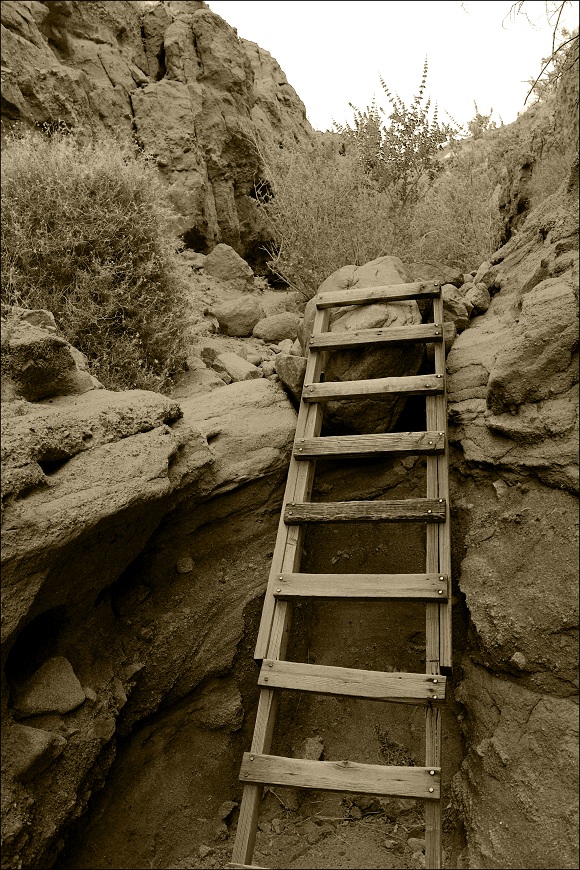
5551485217_8ffd5237e8_oOn the narrow road, giving up is a constant temptation, but it is the very worst thing to do. When we are tempted to give up, we should ask ourselves what will be the end of the road if we take the broad and straight and carefree way. I once read a story of a desert father who struggled mightily with lust. This had been going on for years and years, until one day, a great monastic saint came to the monastery and, upon hearing of the father’s terrible struggle, prayed to God that the brother would be set free from lust. The next day, the father came to the great monastic and asked him what he had done. “Brother, I saw that you were in great distress and I learned that you had been fighting this passion for decades. So, I asked the Lord to relieve you of it.” The father began to cry and pleaded with the saint to ask the Lord to renew the struggle. The saint was amazed and asked why he would want such a thing. The father replied, “Because by the struggle I was attaining salvation. Now that it is gone, what will I do?”

I am climbing St. John’s ladder – one rung at a time and every rung goes higher. One rung up, and then I slip back two. I am sad that I have slipped back, but shall I stop? No! I will reach again, and step again, and this time I will try to hold on a bit harder. Why should I keep trying?
Because my Father is pleased that I am on the ladder, that’s why.
I am climbing St. John’s Ladder.

Climb, my brothers and sisters, though your arms grow weary from the effort! For by struggling for the next rung, God is so pleased with you!


Der Ort an dem sich der heilige Johannes der HImmelleiter in der Askese übte

Sina- Ägypten - beim heiligen griechisch orthodoxen Kloster der heiligen Katharina


Quelle:http://agiosgeorgiosthivas.blogspot.de/

Ladder of Divine Ascent: Steps 8-11 (St. John Climacus)

Hl. Nektarios von Ägina - Über die göttliche Liebe


Göttliche Liebe ist die vollendete Liebe zum Göttlichen, die sich äußert als ununterbrochenes Sehnen nach dem Göttlichen. Göttliche Liebe wird in einem reinen Herzen geboren, denn in ein solches Herz kommt die göttliche Gnade herab. Die göttliche Liebe ist ein göttliches Geschenk, das der reinen Seele geschenkt wird von der göttlichen Gnade, die herabkommt und sich der Seele offenbart. Ohne göttliche Offenbarung kann in keinem Menschen göttliche Liebe geboren werden. Denn eine Seele, die solche Offenbarung nicht empfangen hat, hat die Einwirkung der Gnade nicht empfangen und bleibt so ohne Erfahrung der göttlichen Liebe. Es ist mithin unmöglich, daß göttliche Liebe geboren wird ohne Einwirkung von Kraft, göttlicher oder menschlicher, auf das Herz.
Die Gottliebenden wurden zur göttlichen Liebe gezogen durch die göttliche Gnade, die auf ihr Herz einwirkte, sich ihrer Seele offenbarte und sie zu Gott hin zog. Zuerst liebte Gott den Gottliebenden, erst dann entbrannte jener in Liebe zu Gott. Zuerst ward der Gottliebende Sohn der Liebe, erst dann liebte er den himmlischen Vater.
Nie schläft das Herz dessen, der den Herrn liebt, sondern in seiner übermäßigen Liebe wacht es immerdar. Des Bedürfnisses der Natur wegen schläft der Mensch, doch sein Herz wacht und lobsingt Gott.
Der göttliche Chrysostomos sagt über die geistige Liebe: „Die geistige Liebe ist so überwältigend, daß sie keinen Augenblick abläßt, sondern die Seele des Liebenden allezeit völlig beherrscht und keinerlei Trübsal oder Schmerz in der Seele aufkommen läßt.“
Die gottliebende Seele hängt Gott an mit aller Kraft. Auf Ihn vertraut sie, auf Ihn setzt sie all ihre Hoffnung. Die göttliche Liebe hebt sie empor zu Gott, und mit Ihm spricht sie Tag und Nacht.
Die Seele, die verwundet ist von der göttlichen Liebe, begehrt nichts außer dem höchsten Gut. Alles andere läßt sie beiseite, findet an nichts anderem Geschmack.
Die Seele, die ergriffen ist von der Liebe zu Gott, gibt sich der Betrachtung des Wortes Gottes hin und verbleibt in Seinen Zelten. Öffnet sie den Mund, so redet sie von Gottes Wundern. Spricht sie mit anderen, rühmt sie Seine Herrlichkeit und Majestät. Unablässig läßt sie Lobpreis und Dankeslieder aufsteigen zu Gott und betet Ihn an mit göttlicher Sehnsucht. So formt die Gottesliebe die ganze Seele sich selbst an, verbindet sie mit ihr und macht sie sich ganz zu eigen.
Die Seele, die ergriffen worden ist von der Liebe zum Göttlichen, hat das Göttliche richtig erkannt, und diese Erkenntnis hat ihre göttliche Liebe entfacht.
Die Seele, die ergriffen ward von der Gottesliebe, ist zur Glückseligkeit gelangt, denn sie hat Den erreicht, nach dem sie verlangte, und Er hat alle ihre Sehnsüchte erfüllt. Jedes Begehren, jedes Sehnen, jedes Verlangen, das der Gottesliebe fremd ist, wird, gemessen an ihr, als bedeutungslos und wertlos zurückgewiesen.
Wie erhebt diese Liebe zum Göttlichen, die identisch ist mit der göttlichen Liebe, die von ihr ergriffene Seele! Einer leichten Wolke gleich läßt diese göttliche Liebe die Seele aufsteigen und bringt sie hin zum unerschöpflichen Quell der Liebe, zur ewigen Liebe, und erfüllt sie mit unvergänglichem Licht.
Die Seele, die verwundet ist von der göttlichen Liebe, freut sich allezeit, sie jubelt und springt und tanzt, denn sie ruht beständig in der Liebe des Herrn wie „an den Wassern der Ruhe“ [vgl. Ps 22,2]. Keine Trübsal dieser Welt vermag ihre innere Stille und ihren Frieden zu stören, kein Schmerz dieser Welt ist imstande, ihr ihre Freude und ihren Frohsinn wegzunehmen.
Die Seele, die ergriffen ist von der Gottesliebe, erhebt sich auf den Schwingen der Liebe, löst sich gleichsam von den leiblichen Sinnen, vom Leibe selbst, und vergißt sich selbst in ihrer vollkommenen Hingabe an das Göttliche.
Die unaussprechliche Süße der göttlichen Liebe bezaubert das Herz, nimmt es ganz in ihren Bann und zieht den Sinn zum Göttlichen hin, so daß er sich mit der Wonne Gottes erfreut.
Die göttliche Liebe bewirkt Gewöhnung an Gott, die Gewöhnung bewirkt Vertraulichkeit, die Vertraulichkeit führt zum Genuß und der Genuß zum Durst.
Die Seele, die angerührt worden ist von der Gottesliebe, kann an nichts anderes mehr denken und nichts anderes mehr begehren, und mit unaufhörlichen Seufzern ruft sie: „O Herr, wann werde ich Dich erreichen und erscheinen vor Deinem Angesicht? Meine Seele sehnt sich, zu Dir zu kommen, mein Gott, so wie der Hirsch sich sehnt nach den Wasserquellen“ [vgl. Ps 41]. 
 Solcherart ist die göttliche Liebe, die die Seele in Besitz nimmt.